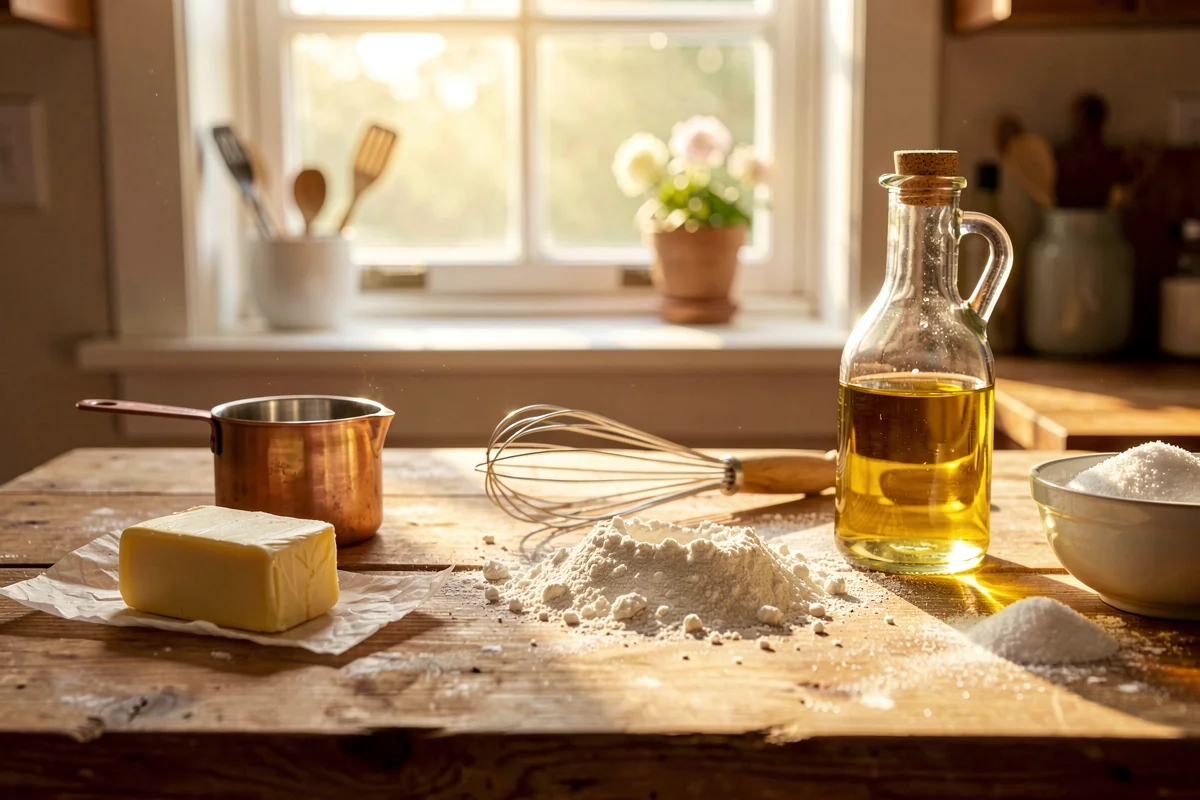
I used to swap butter for oil at 1:1 because every chart I saw said "they're both fat, just use the same amount." Then I made a batch of brownies that tasted like I'd eaten a spoonful of grease. The problem wasn't my technique. It was the math and the science.
Here's the thing nobody tells you: butter is not the same substance as oil. One is a complex emulsion, the other is pure lipid. And when you ignore that difference, your crumb, rise, and browning all go sideways.
This is the cheat sheet I wish I'd had. It covers the two substitution pairs that I can actually back with sourced chemistry: butter-to-oil and buttermilk-to-milk-plus-acid.
Why the 1:1 Swap Is Wrong (Butter → Oil)
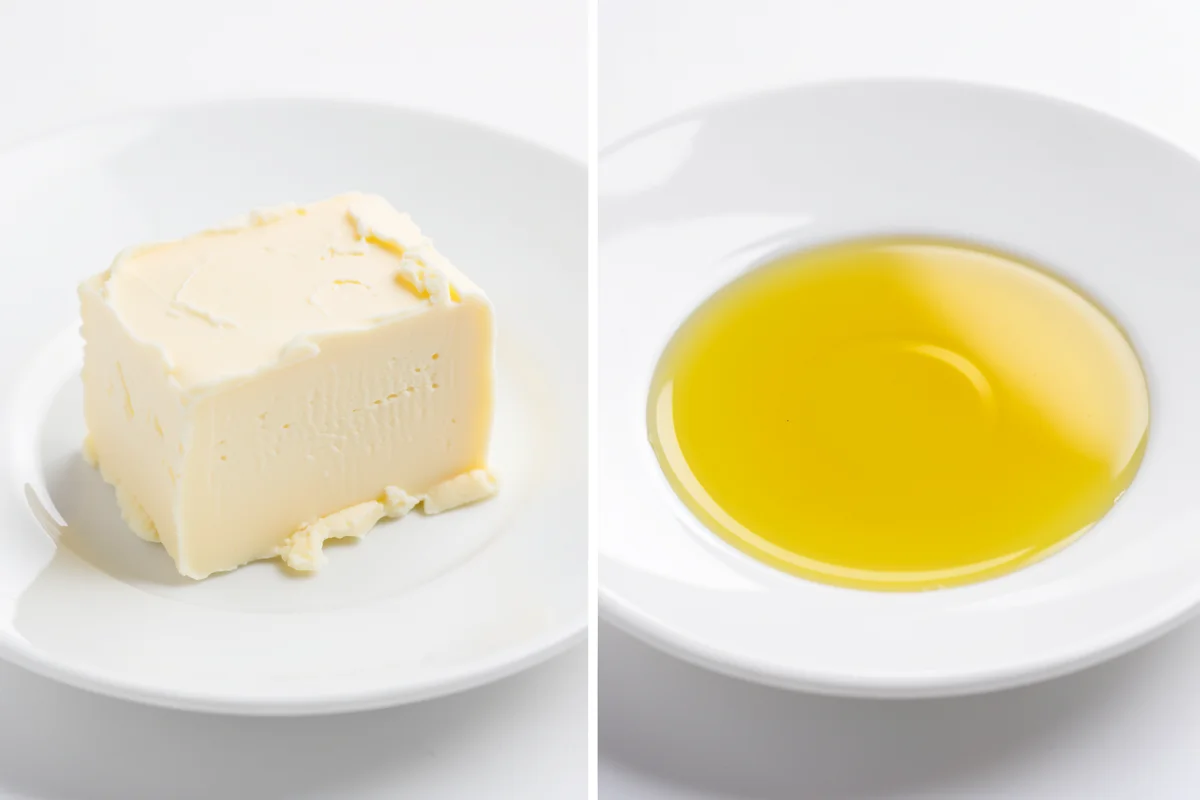
Standard unsalted butter is roughly 80% fat, 15% water, and 5% milk solids (lactose, casein, whey proteins). USDA FoodData Central puts salted butter at 80.9% fat, 16.5% water, and about 2.6% protein and minerals. Cooking oil, by contrast, is 100% fat. No water. No solids. Just triglycerides.
So when a recipe calls for 1 cup of butter and you dump in 1 cup of oil, you've added 25% more fat than the recipe was engineered for. The result is a greasy, dense bake that never sets the way it should.
The fix is a multiplier.
Butter → Oil: multiply the butter volume by 0.75. One cup butter becomes three-quarters cup oil. Some calculators use 0.80, citing butter's 80% fat content directly. Both are defensible. I lean toward 0.75 for home bakers because it gives a slightly leaner crumb and leaves room for the water you're about to lose.
Oil → Butter: multiply the oil volume by 1.33. One cup oil becomes 1 1/3 cups butter.
Here's the quick-reference table I keep taped to my oven:
| Butter amount | Oil equivalent (×0.75) | Oil equivalent (×0.80) |
|---|---|---|
| 1 cup (227 g) | 3/4 cup (186 g) | 7/8 cup |
| 3/4 cup (170 g) | 1/2 cup + 2 tbsp (140 g) | 5/8 cup |
| 1/2 cup (113 g) | 1/3 cup + 1 tbsp (93 g) | 2/3 cup |
| 1/4 cup (57 g) | 3 tbsp (43 g) | 1/3 cup |
| 2 tbsp (28 g) | 1 1/2 tbsp (21 g) | 1 2/3 tbsp |
Source:
If you're weighing rather than measuring by volume, use 0.75 × butter weight for oil, then add 16% of that weight in water if the recipe is moisture-sensitive. One cup of butter is about 227 g; three-quarters cup of oil is about 164 g.
The Water You're Losing (and How to Make It Up)
Butter's 15% water isn't just filler. In a pie crust, that water flashes to steam and puffs the layers into flakiness. In a creamed-butter cake, it helps the crumb stay tender. When you swap to oil, that water vanishes.
For each cup of butter you replace, add roughly 1 to 2 tablespoons of water, milk, or another liquid to keep the moisture balance intact. In bread dough, that adjustment matters more. A 1-tablespoon-per-cup error, scaled up to a 5-gallon café batch, becomes a quarter-cup water deficit and a visible sinkhole in the crumb.
Where Substitution Works and Where It Flat-Out Fails
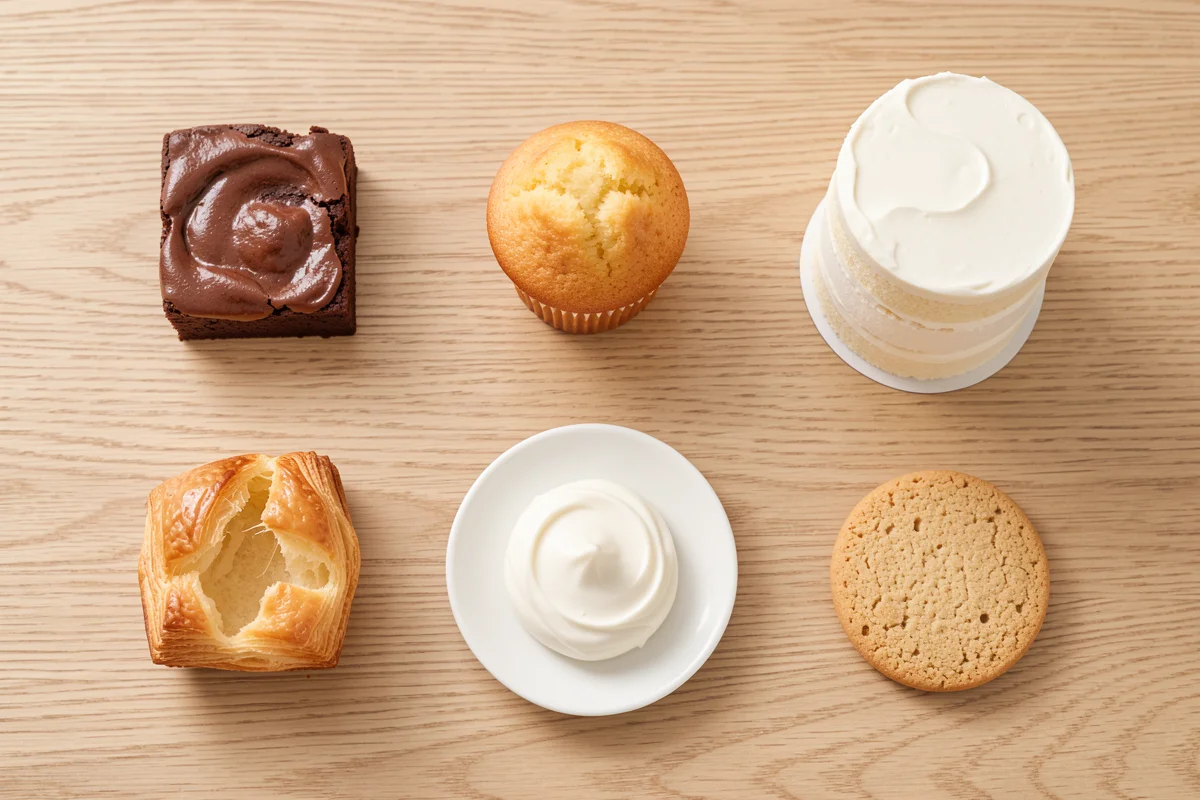
This is the dirty little secret that many "conversion charts" leave out. The ratio gets you the right fat content, but it does not get you the right structure.
Brownies. Tolerate the swap well. The 0.75 factor gives you a shinier, fudgier top. If you're going the other direction (oil → butter in a box mix), drop one egg per full cup of oil to avoid a cakey result.
Quick breads and muffins. Oil coats flour proteins more completely than solid butter, which reduces gluten development. You get a softer, moister crumb. That's a feature here, not a bug.
Layer cakes (creamed-butter method). Here's the hard limit. Creaming means beating solid butter with sugar so the sugar crystals cut into the fat and trap air. Liquid oil can't do that. Oil-based cakes need a wet-then-dry folding method instead. If a recipe specifically calls for creaming, skip the substitution entirely.
Puff pastry and laminated dough. Butter is about 63% saturated fat; olive oil is about 14%. In laminated dough, that saturation keeps layers separate during folding. Oil liquefies fully at room temperature and destroys the lamination. No ratio fixes this.
American buttercream. Oil stays liquid at room temperature. The mix collapses. You need a vegan butter substitute with emulsifiers, not a vegetable oil swap.
Shortbread. It's 50% butter by weight. Pure oil substitution breaks the structure because there's no gluten network to hold the shape. A 50/50 butter-oil blend can save it, but going all-oil demands a binder like an extra egg yolk.
| Recipe type | Swap works? | Why / why not |
|---|---|---|
| Brownies | Yes (both directions) | Dense structure tolerates liquid fat; fudgier top with oil |
| Quick breads / muffins | Yes | Reduced gluten = softer crumb, which is desirable |
| Creamed-butter layer cakes | No | Air-trapping requires solid fat; oil can't cream |
| Puff pastry / laminated dough | No | Oil liquefies at room temp; lamination destroyed |
| American buttercream | No | Oil stays liquid; frosting collapses |
| Shortbread | Partial | 50/50 blend works; pure oil needs a binder |
| Carrot cake / olive oil cake | Yes (oil is the original) | Oil's uniform coating gives the tender crumb these recipes want |
Flavor Chemistry You're Giving Up
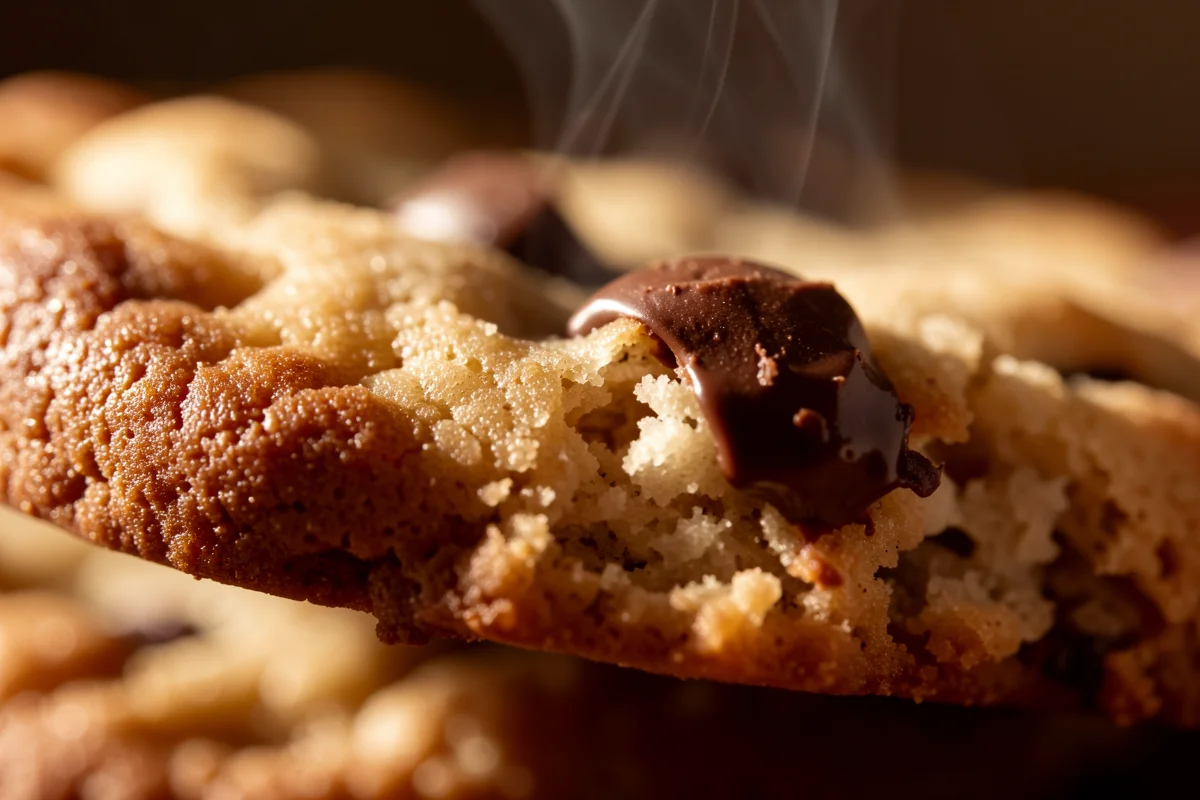
Butter's milk solids contain lactose that drives the Maillard reaction. That's the toasty, nutty browning on cookie edges and cake tops. Oil has none of that.
I compensate by adding half a teaspoon of malt powder per cup of oil. It's not the same, but it nudges the browning flavor back in the right direction.
Also worth noting: butter smokes at about 302 °F (150 °C) because of those milk solids. Oil tolerates higher heat but loses the browning compounds when you're searing.
For the oil itself, stick with neutral varieties. Vegetable, canola, and light olive oil won't fight your recipe's flavor. Extra-virgin olive oil's peppery notes can read as rancid in a vanilla cake. Coconut oil (melted) is the closest to butter in solid-state behavior and works in frostings that need to set firm.
Buttermilk vs. Milk + Acid: The Ratio That Actually Matters
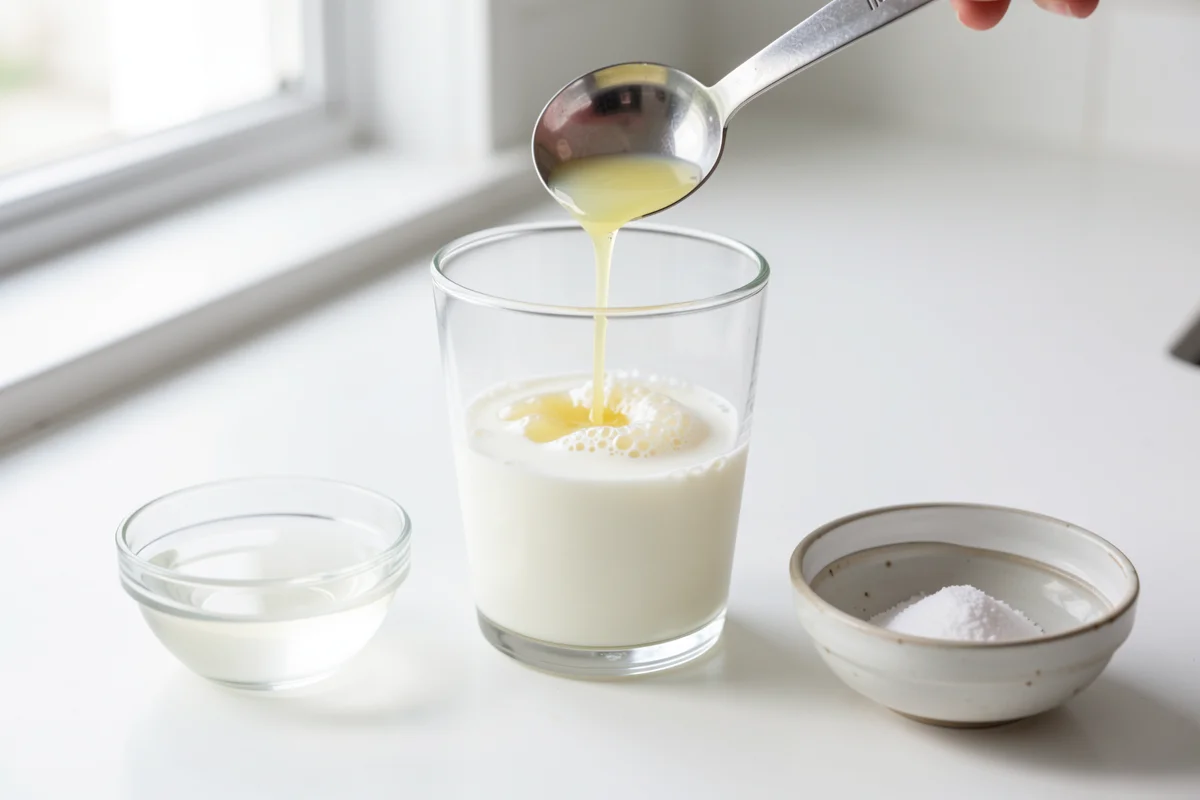
This is the second pillar, and the chemistry is simpler than the butter question but just as non-negotiable.
Buttermilk is acidic. That acid reacts with baking soda to create carbon dioxide bubbles, which is what makes biscuits, pancakes, and cakes rise. Pour plain milk into a recipe engineered for that reaction and you get a flat, tough result. The acid also breaks down gluten development, which is why buttermilk-based bakes come out softer and more tender than the same recipe made with regular milk.
If your recipe uses baking powder as the leavener (not baking soda), you can usually just swap in regular milk. The acid-soda reaction isn't the engine here.
The standard substitution: 1 cup buttermilk = 1 cup milk + 1 tablespoon acid (lemon juice or white vinegar), rest 5 to 15 minutes. The acid curdles the milk proteins just enough to mimic buttermilk's tang and thickness.
Other options I've tested:
- Milk + cream of tartar: 1 cup milk + 1 3/4 tsp cream of tartar. Good pantry fix when you don't have citrus or vinegar on hand.
- Greek yogurt, thinned: 1/3 cup yogurt + 2/3 cup milk. Higher tang, medium thickness. Works well when the recipe leans on buttermilk's flavor.
- Kefir: 1:1 swap. I've used it in scones and cupcakes and it works very well.
The key variable is how much the recipe leans on buttermilk's flavor and body. A panna cotta or a dressing, where the tang is the whole point, needs real cultured buttermilk or the kefir/yogurt swap. For everyday baking when the carton is empty, the milk-and-acid fix carries the bake just fine.
One practical note: if you're using the cream-of-tartar route, sift your dry ingredients first. I've had clumps of undissolved powder in a bake and the off-taste was not worth it.
A Few Practical Reminders
- Oil-based baked goods stay moist 2 to 3 days longer than butter-based ones.
- Oil-based bakes can brown slightly faster. Start checking for doneness a few minutes early.
- If you're converting oil to butter, the butter brings water back into the recipe. Reduce other liquids by 1 to 2 tablespoons per cup to compensate.
- Whipped butter contains air. Half a cup of whipped butter is less fat than half a cup of stick butter, so volume-based conversions from whipped butter are unreliable.
- When in doubt, use melted butter as a middle ground. It keeps more of the original flavor while still working in recipes that call for oil.
Write your adjustments on the recipe card. I learned that the hard way after a wedding-cake tier needed an extra 2 tablespoons of water per converted cup to keep the crumb from fracturing.
The ratio gets you 80% of the way there. The structural chemistry gets you the rest. Know which one your recipe is actually testing, and the swap stops being a gamble.