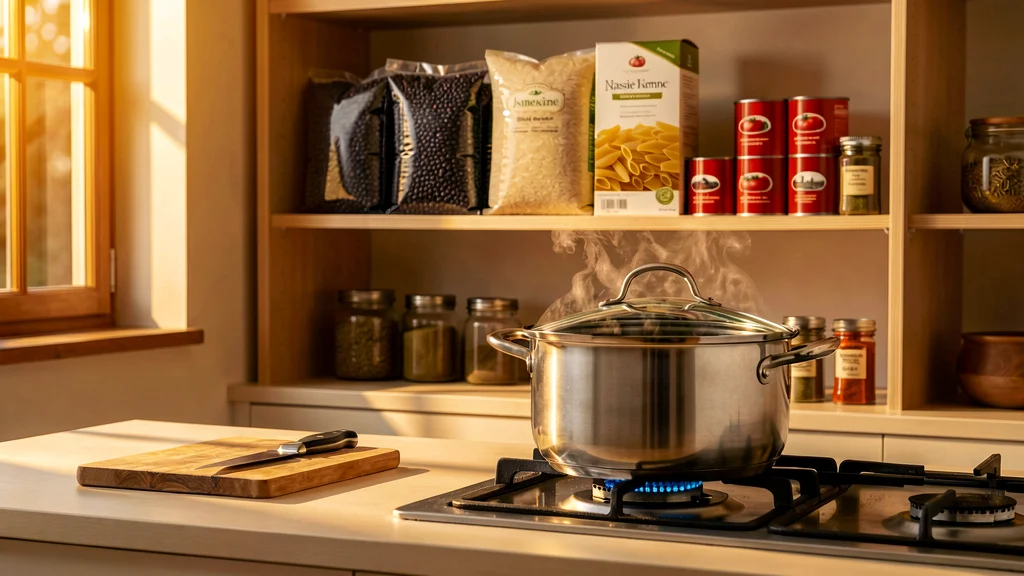
I opened my pantry last month and counted what I actually had. Rice. Dried beans. A box of pasta. A bag of frozen spinach. Canned tomatoes. A jar of cumin. That's about it. And I made dinner. Not a sad dinner. A real one, with flavor and texture and enough protein to keep me full until lunch the next day.
That's the thing about pantry cooking that I think most people miss. It's not deprivation. It's a skill. And once you build the muscle, you stop feeling like you're scraping by and start feeling like you're in control.
The backbone: what actually lasts
Imagine you're working with ingredients that sit at room temperature or in the freezer, and you have no fresh produce dependency and no "use this by Thursday" pressure. Just things that wait for you.
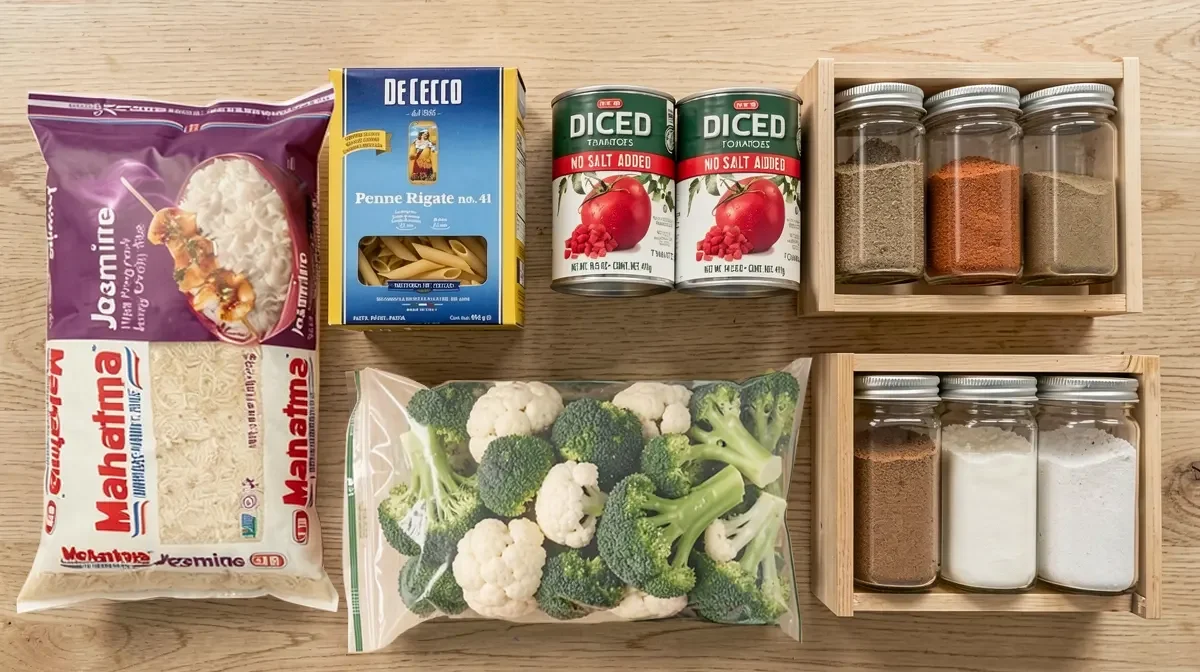
The staples that keep showing up across every budget-cooking source I've read are the same handful. Rice. Pasta. Dried beans and lentils. Canned tomatoes. Frozen vegetables. Basic spices like cumin, garlic powder, paprika, oregano.
Here's what I keep on hand, and why:
| Staple | Why it works |
|---|---|
| Dried beans (black, kidney, chickpeas) | Cheap per serving, high protein, cook in 20-30 min |
| Rice | Fills out any dish, stores indefinitely |
| Pasta | Fast, versatile, pairs with almost anything |
| Frozen mixed vegetables | Nutritionally on par with fresh, zero waste |
| Canned tomatoes | The base for sauces, soups, stews |
| Dried spices (cumin, paprika, garlic powder,onion powder, salt & pepper) | Transform bland grains into meals |
That's not a full grocery store. That's a shelf. And it can be enough.
Frozen isn't the compromise you think it is
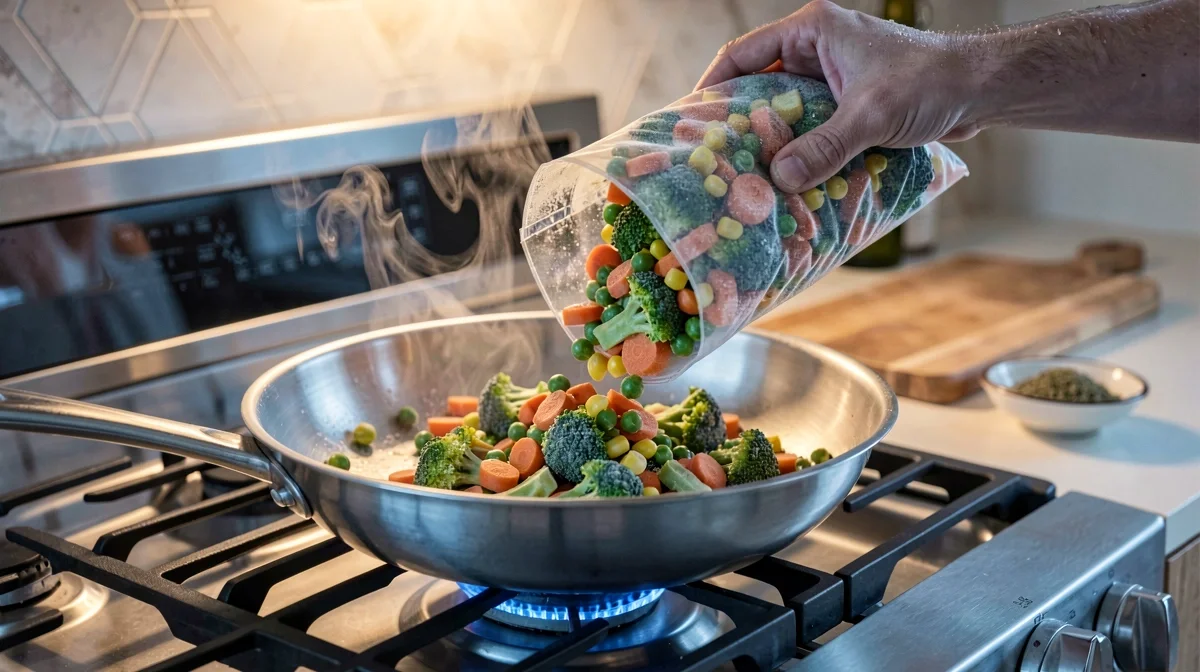
I used to treat frozen vegetables like a last resort. Something you grabbed when the fresh stuff had gone soft in the crisper drawer. Then I started reading the actual nutrition data, and it changed my mind.
Frozen fruit and vegetables can have just as much, and sometimes more, nutritional value as their fresh counterparts. Think about it. The fresh spinach at the store was picked days ago. It's been sitting in a truck, then a cooler, then your car, then your fridge. The frozen bag was flash-frozen at peak ripeness, within hours of harvest. The nutrients are locked in.
A BuzzFeed contributor described a family favorite that's "usually throw[ing] together out of the freezer and pantry staples" for a chicken Parm night. Frozen chicken tenders, marinara, cheese, a bag of frozen veggies on the side. That's a full meal. Nobody at the table is thinking about the word "frozen."
And here's the practical bonus: frozen produce doesn't go bad. You buy a bag of mixed vegetables, use half, and the other half is still there three weeks later. No slimy broccoli. No mystery mush in the back of the fridge.
Whole beats pre-cut, and the math is simple
This one hit me hard when I actually did the price comparison. Pre-cut vegetables and packaged convenience items cost noticeably more than buying the same ingredients whole. A bag of pre-sliced carrots. A container of chopped broccoli. You're paying for someone else's knife work.
Slicing a head of broccoli or a few carrots takes only a few minutes. I timed myself once. Four minutes, start to finish, including washing the knife. The pre-cut bag cost about twice as much per pound.
I don't say this to be smug. I say it because the first time I tried it, I was lazy and I bought the pre-cut. And then I did the math and felt a little embarrassed. The swap is genuinely easy. You just have to do it once and then it's a habit.
The swaps that actually change your grocery bill
This is where it gets fun. You don't need a food science degree to make a substitution that saves real money. A few that I've seen backed up by actual price comparisons:
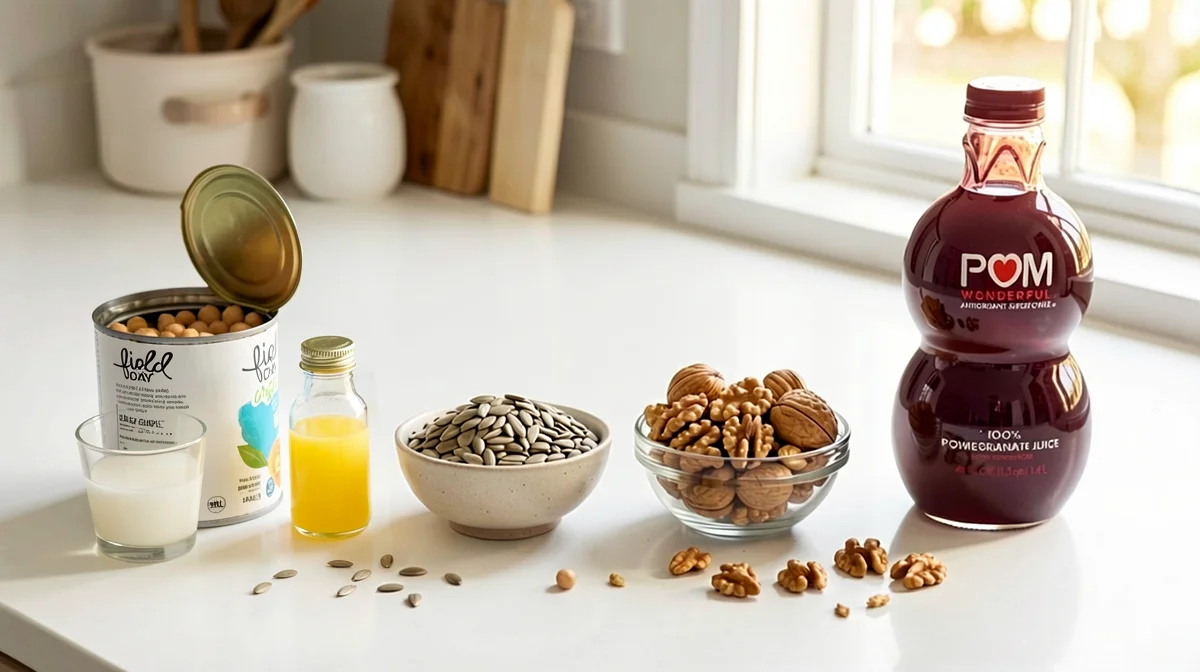
Chickpea liquid (aquafaba) for buttermilk or eggs.
If you already have the can of chickpeas. The liquid in the can that would normally go down the drain is useful. Add a splash of lemon juice or vinegar, and you've got a buttermilk substitute for baking or marinades. Add a little cream of tartar then whip for an whipped egg whites replacement for baking.
Sunflower seeds for nuts.
Try swaping sunflower seeds in place of pricier nuts in recipes. Besides being cheaper they still deliver the nutty taste, and can be used as a nut substitute for those with nut allergies. I've done this in granola and in pesto. I could hardly tell the difference.
Cranberry juice for red wine.
Cranberry Juice is extremely versitile. It can be used for deglazing pans, tenderizing meat, salad dressings, sauces, braises, and of course you can drink it.
Store brands for the basics.
Store-brand flour, sugar, canned goods, and baking staples are often very similar in ingredients to name brands, with a significant price difference. I switched many of my staples to the store brand 4 years ago and I have not noticed a difference in a single recipe. In some cases I thought the local store brand was better than name brands.
Homemade dressings over store-bought.
I stopped buying pre-made salad dressings a long time ago. I just always felt dissapointed with the texture and flavor of the off-the-shelf dressings. In addition they all have extra chemicals and preservatives that I would rather not ingest if I can avoid it. So instead when I want to have a salad I just whip up a small batch of whatever flavor I am in the mood for. One of the easiest is an apple cider vinaigrette. It's vinegar, oil, a little Dijon mustard, a pinch of sugar (I prefer honey). Throw in some dried oregeno and garlic and orange juice for an added flavor boost. Then its just thirty seconds of stirring and you have a great dressing that is always made fresh so it does not take up space in the fridge.
Where you buy matters as much as what you buy
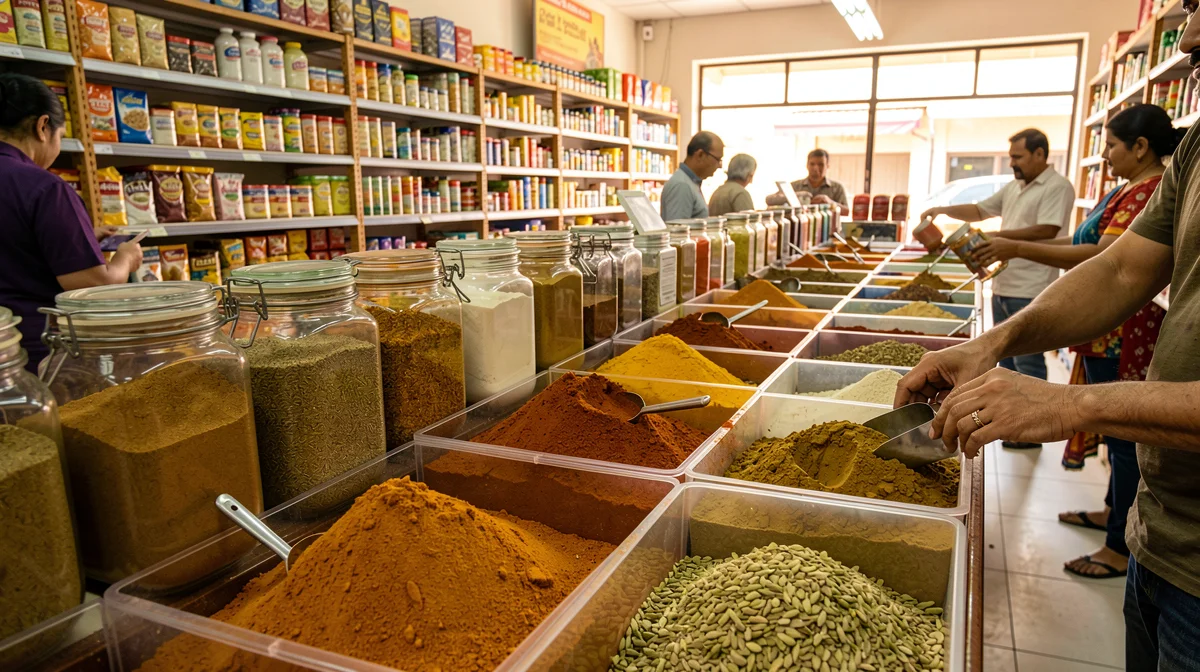
I learned this the hard way. I was buying my spices at the same mid-size supermarket where I got everything else, and the little jars of cumin and smoked paprika were adding up.
Ethnic grocery stores often carry large containers of spices at roughly half the price of small jars sold at mainstream supermarkets. I went to a South Asian grocery store about two miles from my house, picked up a 4-ounce container of cumin for what I'd been paying for a 1-ounce jar, and I've been going back every few months since. The flavor is identical. The price is not. If your grocery store has a bulk spices section, this is also a great way to cut costs without sacrificing flavor.
The kitchen itself is part of the equation
A cluttered, inefficient kitchen environment increases takeout reliance and reduces nutritional quality. The idea is that if your counter is buried in mail and your stove has a three-week-old pot on it, you're more likely to order delivery than to actually cook.
That tracks with my own experience. I clean the counter before I start cooking. Not because it's a rule. Because if I can see the surface, I can actually work on it. And if I can work on it, I'm less likely to open the takeout app.
Practical kitchen swaps, like having a clean cutting board ready or keeping a small spice rack within arm's reach, can cut monthly food costs simply by making the act of cooking less friction.
It's a resilience skill, not a punishment
I remember going to the grocery store back when Covid hit. There was panic in the aisles, everyone was stocking up, which led to shortages on the shelves. I already had all the basic essentials in my pantry before things got chaotic because I don't usually cook from recipes, I choose what to make from what's already in the pantry.
That's the frame I like. Pantry cooking isn't what you do when the world falls apart. It's what you do on a Tuesday when you're short on time and short on money and you still want to eat something that tastes like you put thought into it.