
The Pantry Rescue: Swapping the Stuff You Can't Find
I was halfway through a Thai green curry last month. The recipe called for tamarind juice, and I had none. No specialty store within forty miles. I stared at the fridge, then the pantry, then back at the recipe card. And then it hit me: I had ketchup and vinegar.
Five parts ketchup to one part vinegar. That's the whole trick. Tangy with slight sweetness and the body it gives a sauce works.
That moment, standing in my kitchen with a spoon in my hand and a half-empty bottle of Heinz, is the whole point of substitution. You only need to understand what the ingredient is actually doing in the dish, and then you find something on your shelf that does the same job.
The Rule That Makes Everything Else Work
Every ingredient in a recipe has a job. In baking especially, that job is precise. One component leavens the batter, another binds the mix, a third adds moisture, and a fourth supplies fat for tenderness and flavor. If you pull one out, you don't just grab whatever's closest. You grab whatever fills that same slot without throwing off the balance.
In savory cooking, the logic is looser. You're matching texture, flavor, and how the ingredient behaves under heat. A shallot isn't just a small onion. It's a milder, sweeter one. So when you swap in a red or Spanish onion, you're getting close enough that the dish still tastes right.
That's the whole framework. Figure out the role. Find the match. Adjust if you need to.
The Exotic Stuff You Probably Don't Have
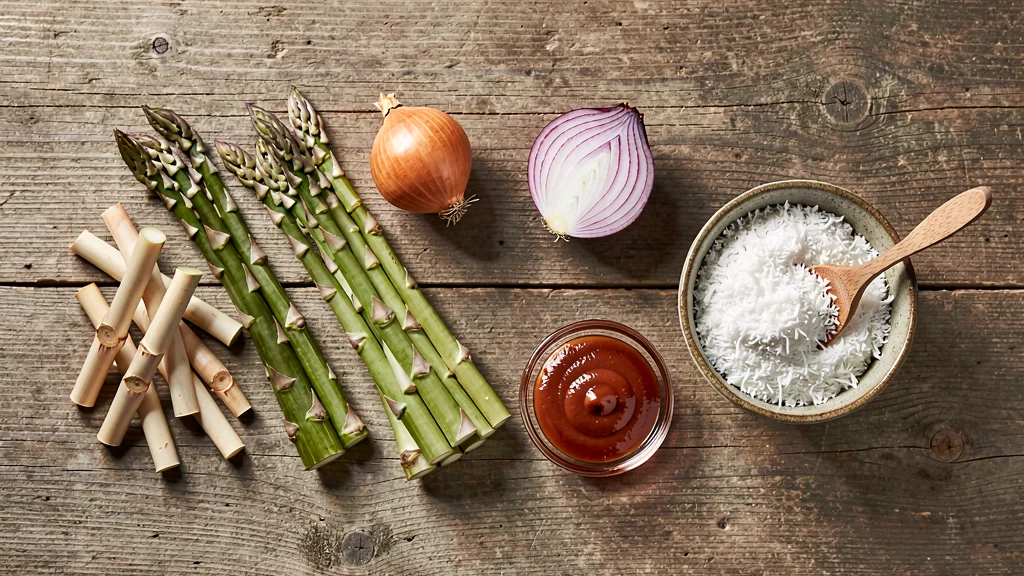
Here's where it gets fun for home cooks who want to branch out past pasta and chicken.
Bamboo shoots. I've made a stir-fry that called for them twice now, and both times I didn't have them. So I used Asparagus, cut into similar lengths. It takes their place. Asparagus has snap and a slight earthiness, plus it holds up in a hot wok. It's not exactly the same but it is close enough.
Shallots. Red onions or Spanish onions work. You lose a little of that delicate sweetness, but the overall flavor profile of the dish stays intact.
Tamarind juice. Mix Five parts ketchuo to one part vinegar and let it sit for a few minutes while the flavors meld into something that reads as tamarind in context.
And if a recipe calls for coconut milk and you've got a bag of unsweetened shredded coconut, you can make your own. Add two and a half cups of water to two cups of the shredded coconut, boil it for 2-5 minuts, let it cool, blend it and, strain through a fine strainer or cheesecloth and you've got a decent stand-in.
Even spices have swaps. Bergamot can can be used for mint. Lemongrass can be replaced with lemon zest. These aren't perfect but they're good enough that you can finish the recipe and nobody at the table will ask what happened.
The Dairy Shelf
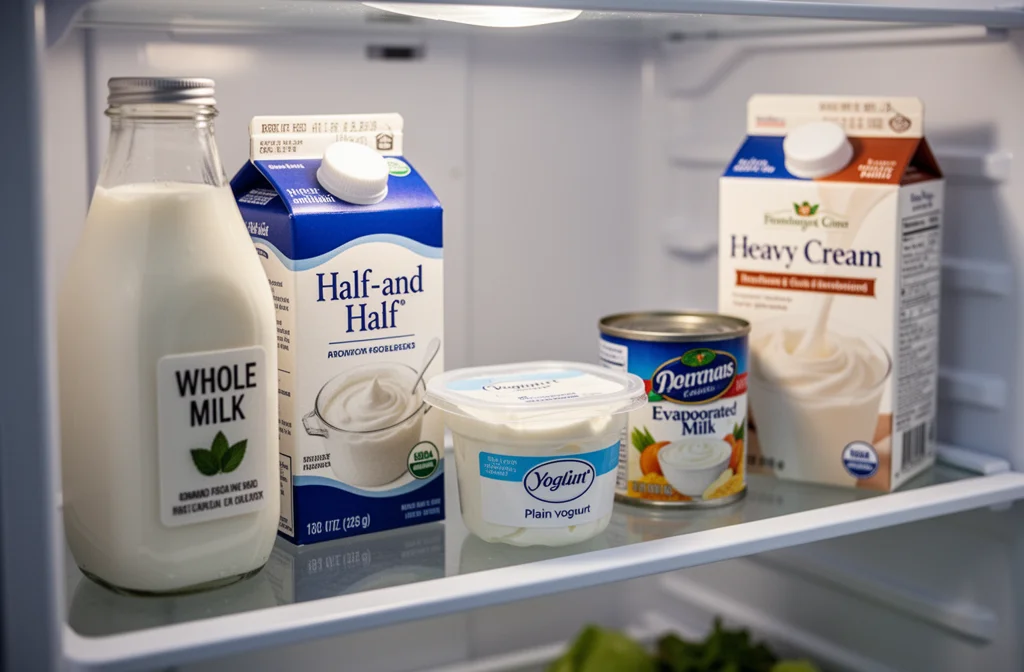
Dairy substitutions tend to be the most ratio-driven. You're matching fat content, and the numbers matter.
Need a cup of whole milk? Pick one of the combinations below that matches what's in your fridge.
- 5/8 cup skim with 3/8 cup half-and-half.
- 2/3 cup 1% milk with 1/3 cup half-and-half.
- 3/4 cup 2% with 1/4 cup half-and-half.
- 7/8 cup skim with 1/8 cup heavy cream.
Sour cream is simpler. A cup of plain whole-milk yogurt does the job. Don't use nonfat or low-fat yogurts because they are too lean so they don't have the richness to stand in for sour cream.
Heavy cream in a soup or sauce? Use a cup of evaporated milk, but don't try to make whipped cream from it and don't use it in a baked good where the fat structure matters. It's a soup-and-sauce swap, period.
Trading Saturated for Unsaturated
If you're cooking with an eye on health, the fat swaps are where you get the most bang for your buck. Saturated fats in a recipe can be replaced with unsaturated ones, and the dish still comes together.
Need Butter or margarine in a sauce? Here you are looking for a fat substitute. Olive oil will get you there. Use Applesauce to add moisture and a touch of sweetness. You can swap in Greek yogurt which will bring tang and body. I've even seen roasted garlic blended with olive oil as a butter replacement, and it actually tastes like a deliberate choice rather than a workaround.
In baking, the ratios shift. Half a cup of vegetable oil replaces a cup of butter in cakes and brownies. Half a cup of Greek yogurt does the same in muffins. Applesauce and mashed banana work in quick breads, though they'll give you a denser, moister crumb.
If you're going the plant-based route, a one-to-one swap with vegan buttery sticks or vegetable shortening handles most recipes. Just knock about half a teaspoon of salt if the original called for salted butter.
Where Baking Gets Tricky
Let's be honest. Baking is where substitutions go sideways more often than not. The chemistry is tighter and less forgiving. A soufflé or a meringue or an angel food cake relies on precise structure, and a swap that works in a soup can make a cake collapse.
When you use a substitution in a baked good, you may also need to adjust the liquid in the recipe. A swap like honey for corn syrup will change the final flavor, and that's not always a bad thing, but it's a change you should expect.
If you're swapping whole-wheat flour for all-purpose, go partial. A quarter to a half cup of wheat in a standard loaf keeps the texture manageable. If you go full wheat the crumb will be dense and dry so you might need extra liquid or fat to compensate for that.
And if you're replacing more than one major ingredient at once, say butter and eggs and flour, the results get unpredictable. So, stick to one or two swaps and you'll be fine.
Cheese: Think Function, Not Name
This one surprised me the first time I read it. When a recipe calls for a specific cheese, the question isn't "what's similar to mozzarella?" The question is "what is this cheese doing here?"
Is it melting evenly over a pizza? Spreading smoothly on a sandwich? Adding a sharp accent to a salad? If it's a key structural ingredient, swap in a cheese with a similar texture and melt behavior. If it's just an accent, a sprinkle of something else, you've got a lot more freedom.
The Eggs Problem
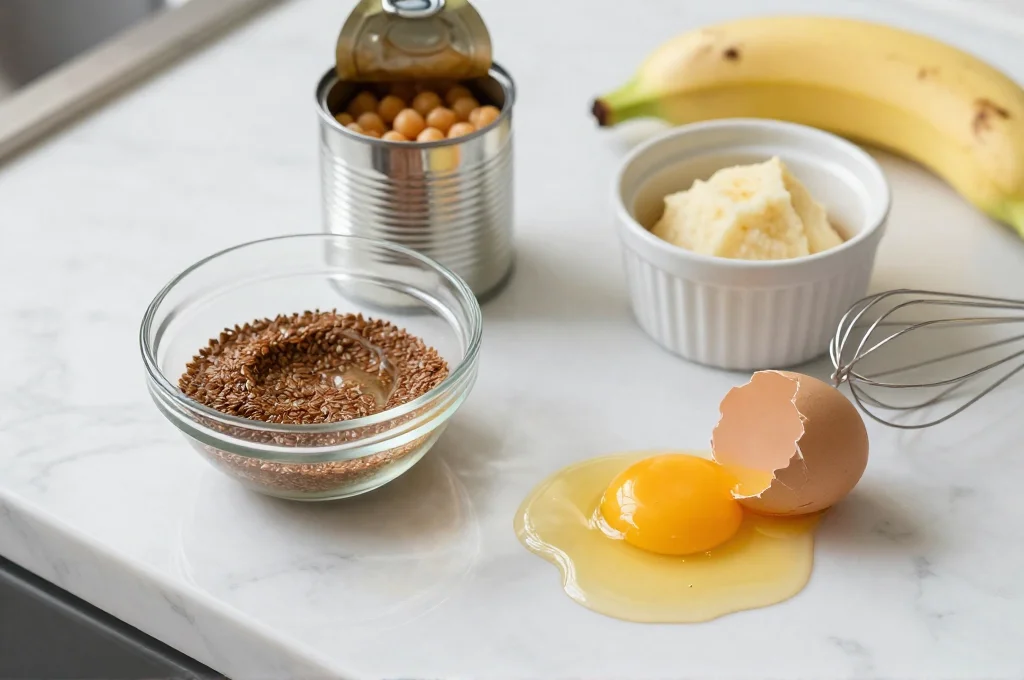
Eggs show up in so many recipes that a good swap saves a lot of time. A tablespoon of ground flaxseed mixed with three tablespoons of water, left to sit for five to fifteen minutes, replaces one large egg. The result is lighter and less dense than fruit purées.
Aquafaba, the liquid from a can of chickpeas, does something similar. About a quarter cup replaces one egg, and you can even whip it for a meringue-like result.
In a pinch, three tablespoons of mayonnaise, or half a mashed banana with a half teaspoon of baking powder, both work in baking.
The Buttermilk Fix
This one I use constantly. One cup of milk, one tablespoon of lemon juice or vinegar. Stir it, walk away for five to ten minutes until it thickens slightly. You've got buttermilk.
The most important skill
The most important skill in the kitchen is adaptability. Not perfection or the ability to follow a recipe to the letter. The ability to look at what you have, figure out what the missing piece was doing, and find a substitute that fills that gap is what will make you a better cook in the long run.
You don't need a specialty store in you city or town. You don't need to plan a trip to the Asian market every time you want to cook a Thai or Indian recipe. You just need a spoon, a bottle of ketchup and vinegar, and the willingness to try the swap and taste the result.
Most of the time, it works. And the times it doesn't, You will learn a little more about what that ingredient actually does. And next time, You'll be ready.